Many family treasures are treasured – not for their dollar value – but because of the memories that they call forth. My Grandfather’s desk was that kind of treasure. Just visualizing him working at that desk brings back warm memories, even if he may have been only paying bills at the time.
It didn’t matter, because it was my Grampa at that desk and we were visiting him and Gramma at the farm and that probably meant we were on holiday. And it was a cool old desk with lots of pigeonholes and special drawers. And the lid folded down, but you had to remember to slide out the braces at each side so the writing surface didn’t break off. And the knob on the right-hand side brace was missing.
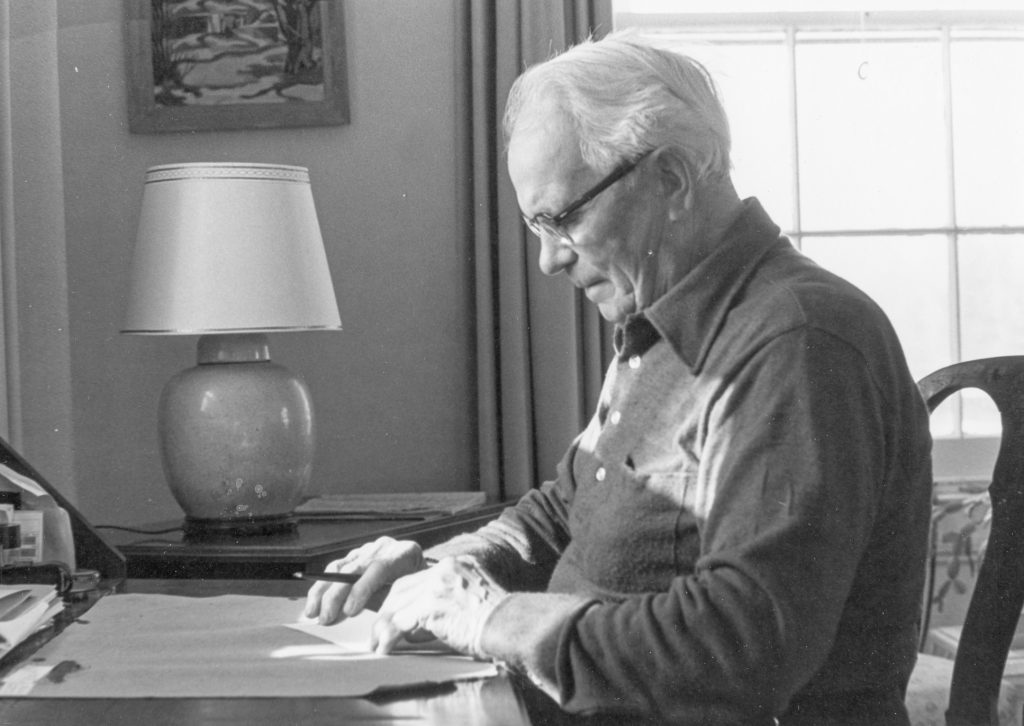
Years later, but while my Dad and Aunt were still alive, and in conversations covering several years, I quizzed them on the provenance of the desk. It’s a history that, before my days of poking into genealogy, quickly became pretty abstract. It took me several years to fully listen to and absorb the story, but it started with a couple of coded references that family members recognized: “The desk was among the things that came up from New York to 231 Alfred in the ‘40s.”
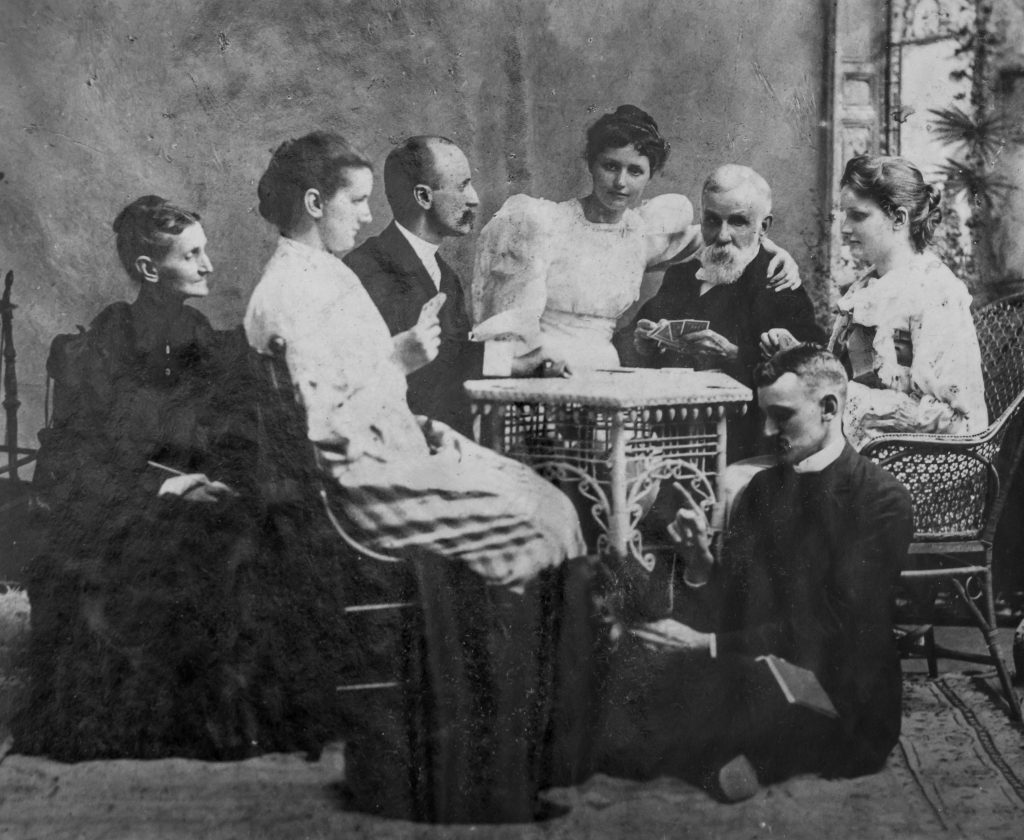
Turns out that my great-grand-aunt Mary (my great-grandmother’s sister) was “companion” to an American woman named Effie Van Gelder Parsons, who came from a wealthy Pennsylvania family. (Even the name sounds moneyed!) Auntie Mary (Douglas) and Effie (known to my Dad and his sisters as “Auntie Parsie”) met at nursing school in Pennsylvania (or New York?) in the late 1800s.
They spent the rest of their lives together and lived for decades in a hotel suite at 125 East 50th Street in Manhattan. Every Christmas, Auntie Parsie and Auntie Mary would send a bundle of presents to my Dad and Aunts. Every summer, they would visit the family in Canada. Our family loved their eccentric Aunts.
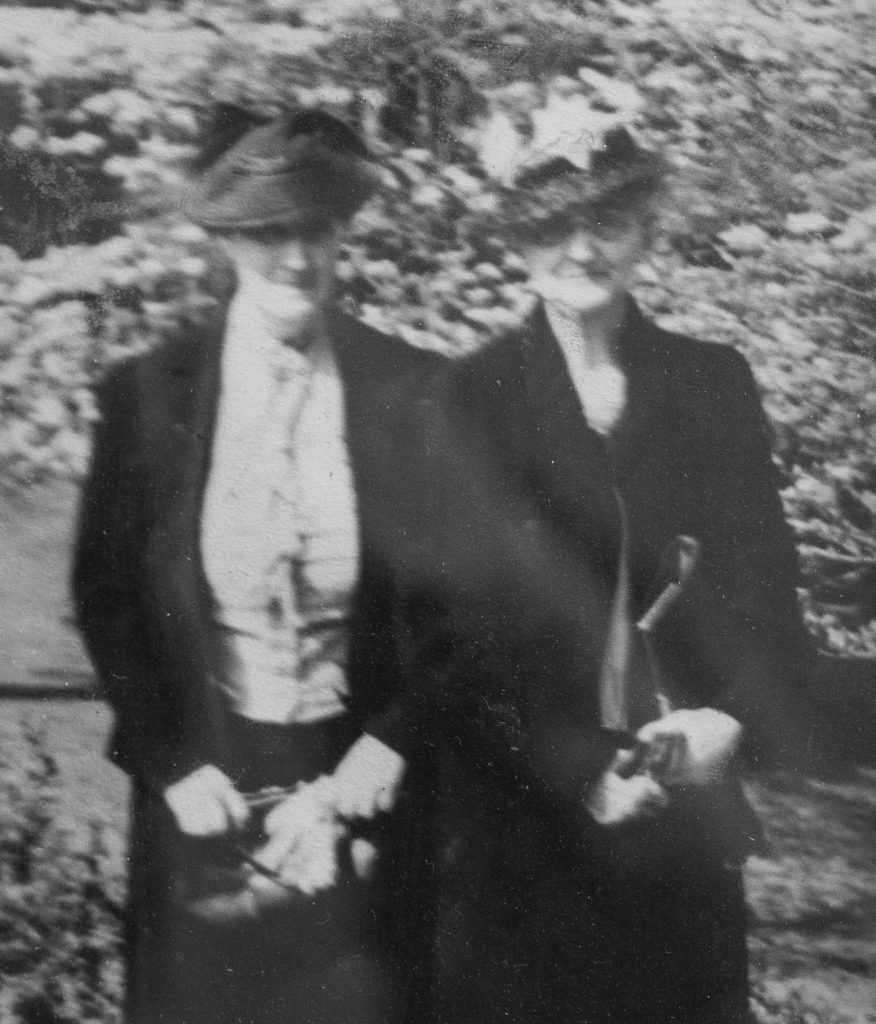
If we kids asked about any associated uncles, it was explained – pretty matter-of-factly – that they were “probably lesbian,” although I can’t remember if that was the word they used; maybe they said homosexual. However they presented the information, though, it was a case of “this was who they were and the choices they made; no big deal” so my generation followed the lead and took it all for granted. Today we’d just say “they were gay” and move on, but back then “gay” meant “happy” and people had a harder time accepting it. Given the times, I think that this was pretty cool on the part of my parents and grandparents.
The desk had been in Auntie Parsie’s family for generations and it was her desk in New York City. It was likely built in the 1700s.
Effie Van Gelder Parsons died in New York in 1944, leaving her family treasures to Auntie Mary. Auntie Mary came home to Kingston to live with her sister and brother-in-law: Margaret and Robert A. J. Diack, who lived at 231 Alfred Street. When Auntie Mary passed away, she left her treasures to the Diacks, my great-grandparents, and they, in turn, left them with the rest of their estate to my grandparents.
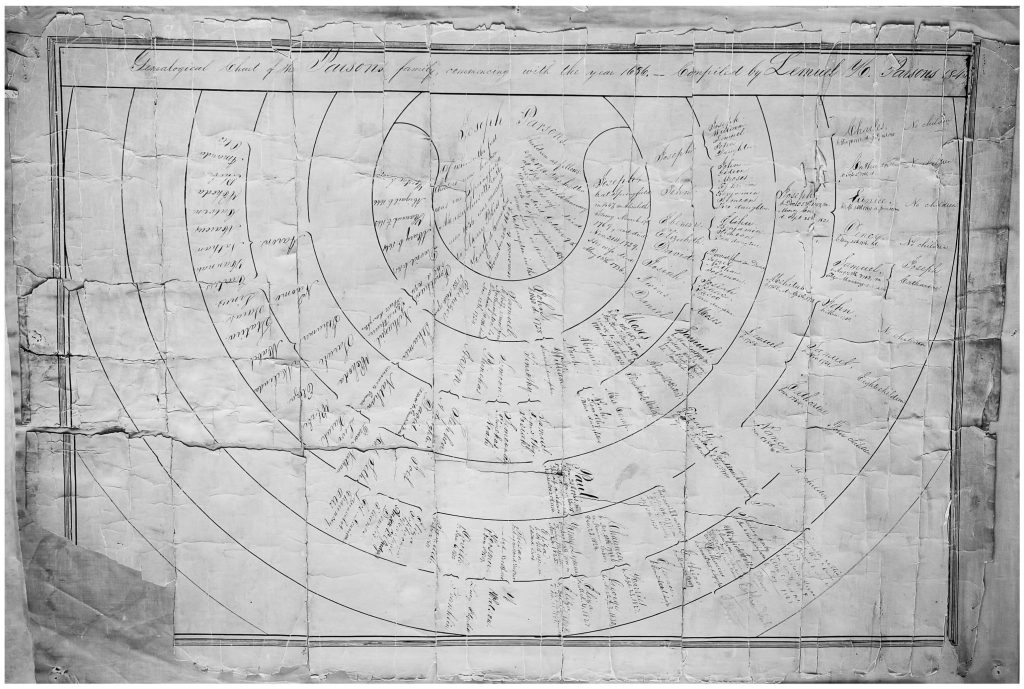
Along with the desk, Auntie Parsie’s estate included several other treasures, which have since been passed along in our family. My cousin now has a genealogical fan chart of Joseph Parsons (1620-1683). It used to be on the wall at the top of the kitchen stairs at my grandparents’ farm. We gave it almost no notice at all when we were kids. Well, now that I am into genealogy, I did some research: Joseph Parsons was born in England and came to the Colony of Massachusetts Bay with the Great Puritan Migration in about 1635. Effie is in the outer ring of the fan chart – eight generations down from Joseph. Holy crap!
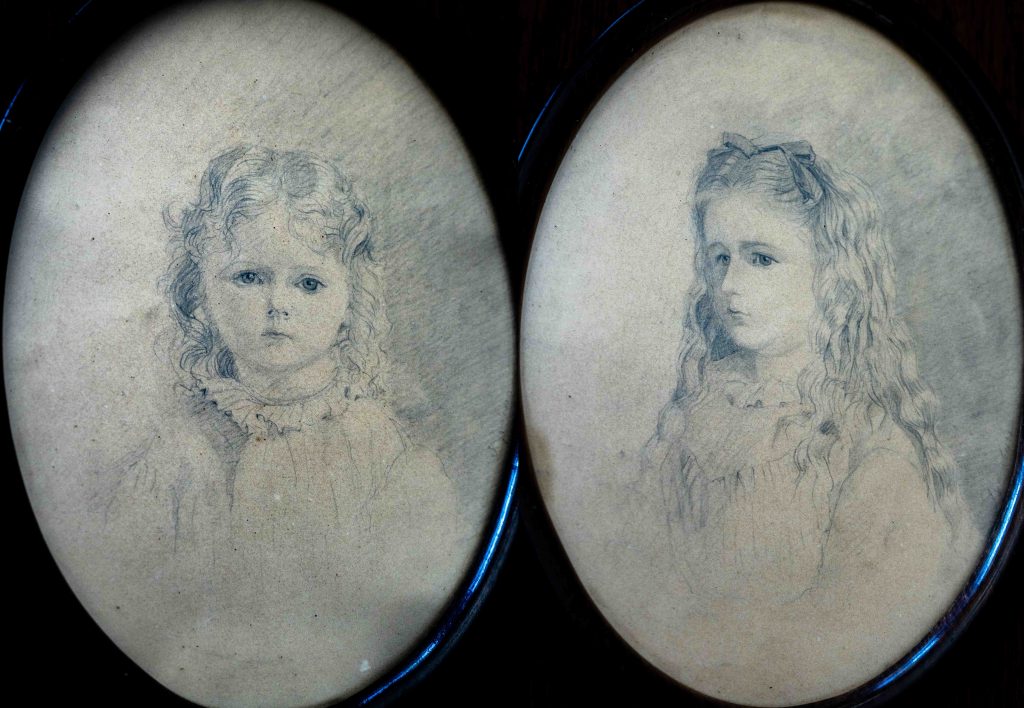
My cousin also has a pair of pencil sketches of Auntie Parsie’s mother (Ellen Eliza Brower (1832-1901)) and Aunt (Laura Gardiner Brower (1824-1903)) that turn out to have been created in about 1835. That was before the invention of photography, when this was the only way of capturing a person’s likeness. These are historical artifacts!
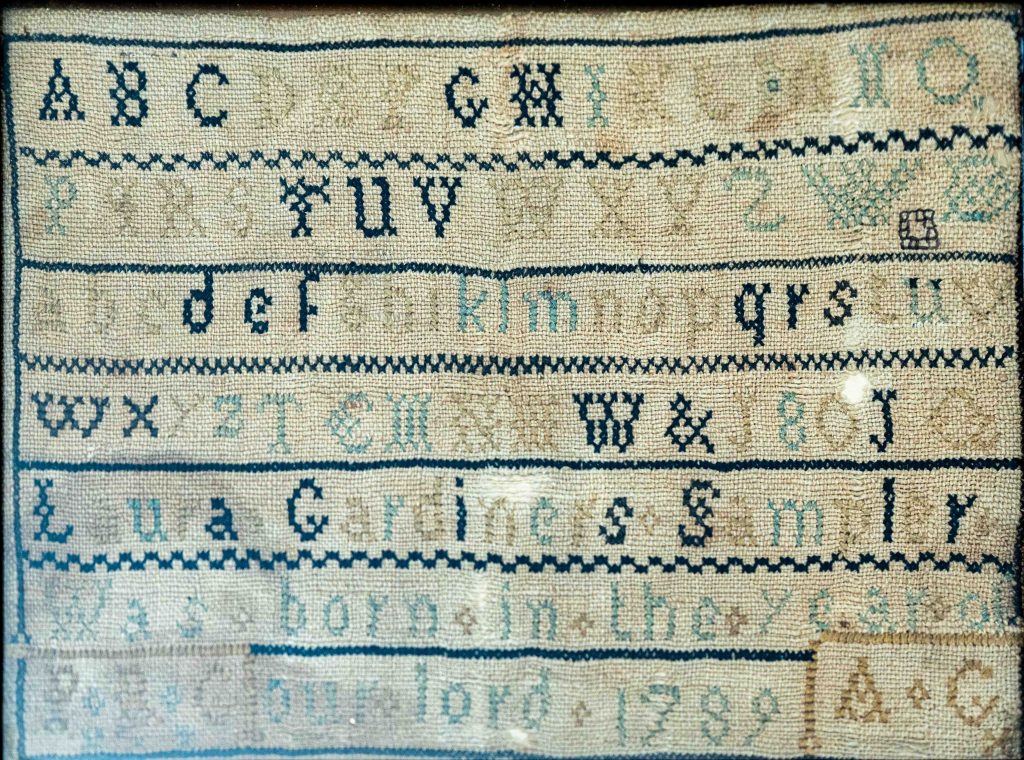
There is also a cross-stitch sampler from Auntie Parsie’s grandmother, Laura Gardiner (1789-1860), created when she was a small child. I’ve held that piece of cloth in my hands. From the 1700s!
This is like eating peanuts: one bite isn’t enough; you have to keep going. Well, I did eat the whole bag of peanuts and I’m still nibbling.
My Aunt (Helen (Boyce) Backhouse), who started the Family History library in Calgary (and after decades of persistence finally got me hooked on genealogy), had another book from Auntie Parsie entitled “Lion Gardiner and his Descendants.” Of course, Lion Gardiner (1599-1663) was another Puritan migrant and was the great-great-great-great-great-great-grandfather (6GGF) of Auntie Parsie. The book was inscribed by the author, Curtiss Gardiner, a Civil War Hero (for the North) and sixth cousin once removed from Auntie Parsie. This just keeps going!
And then, of course, there is the question of Auntie Parsie’s unusual name: Effie Van Gelder Parsons. Maiden name and married name? No, she never married. Records show that Effie’s great-great-grandmother was Aefje Van Gelder, born in New York City in 1725 when it was a colony of England, and fifty years after the English had taken New Netherlands from the Dutch and renamed it. Aefje (pronounced Effye, more or less), was already at least a third-generation colonist. Her name was almost certainly the inspiration for Auntie Parsie’s given names.
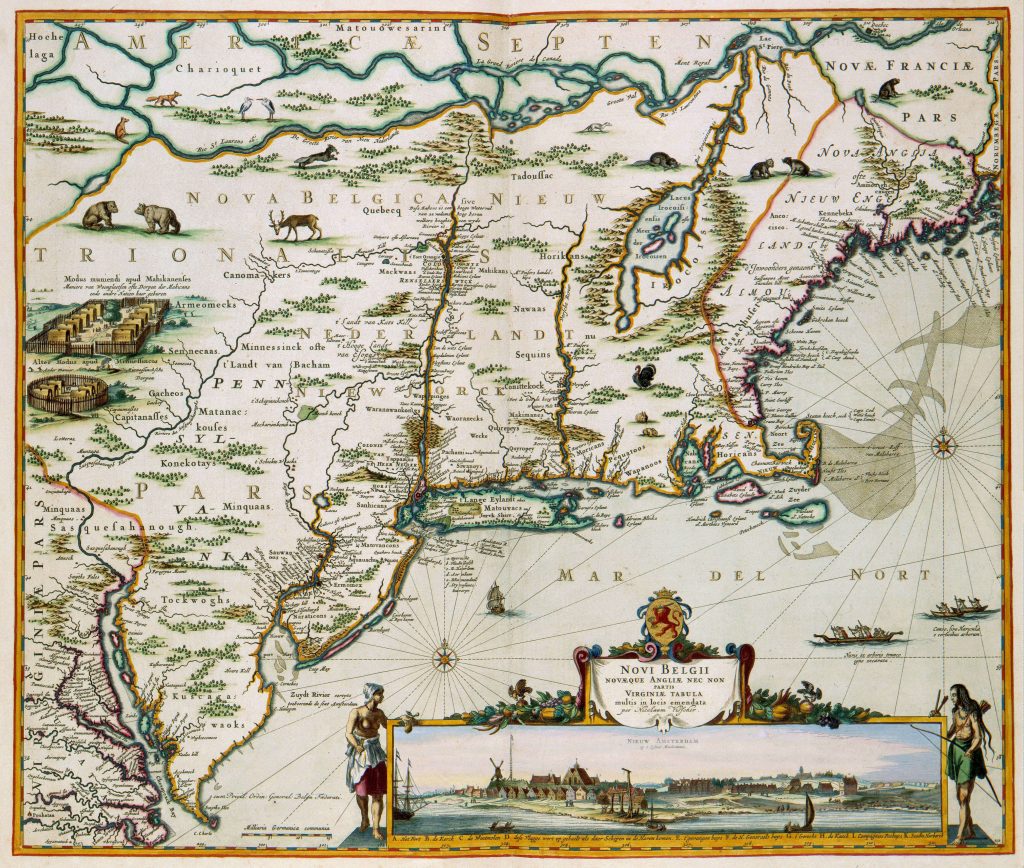
In 1743 Aefje married Abraham Brouwer (which means brewer) and, of course, his family was also one of the original Dutch immigrant families to New Netherlands.
Want more peanuts? Some descendants of the Brouwer family sided with the English in the American Revolution and then fled north after the war, founding Brewer’s Mills on the Rideau Canal. And George Gardiner was a Vermont farmer who joined Jessup’s Rangers and settled in Leeds and Grenville after the Revolutionary War. Related? Probably, somehow, way back. The world was much smaller then.
People who have not been bitten by the genealogy bug will find it difficult to understand why someone would spend so much time on an unrelated person from an American family. Well, Effie Van Gelder Parsons may not have been a blood relative, but I consider her an aunt, and I thank her for giving me such an interesting project on which to spend a couple of weeks’ research and keep me busy through the latest round of blizzards in a cold, dark South Frontenac winter.
Besides, it turns out that I am actually related to Auntie Parsie by blood. Remember her Puritan ancestor, Joseph Parsons? Joseph’s son, Joseph, married Elizabeth, the daughter of John Strong (yes, another Puritan immigrant). It turns out that Effie was the fifth great granddaughter (5GGD) of John Strong, and I am his ninth great grandson (9GGS). That makes Effie and me sixth cousins, four times removed (6C4R).
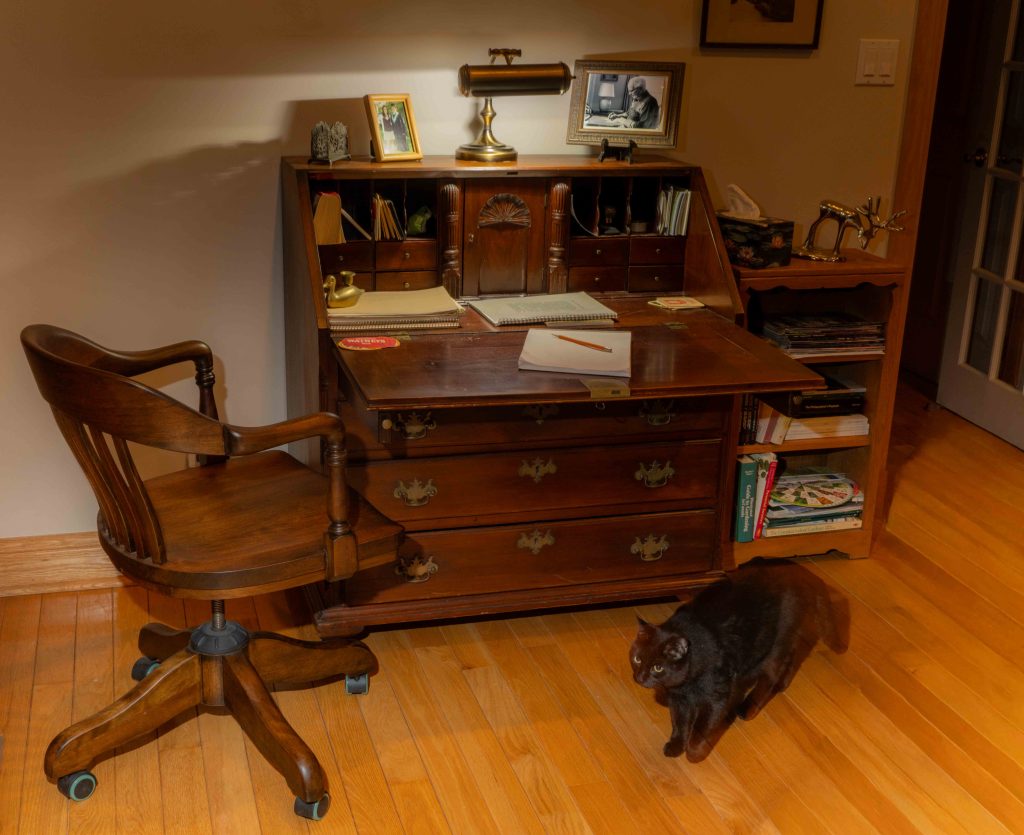
And Grampa’s desk? When Grampa and Gramma gave up their house and farm in the ‘80s, my Dad received the desk. When my parents sold their house a decade ago, I was surprised that everyone just seemed to accept that the desk would go to me. It wasn’t an issue of primogeniture – that wasn’t our family. But perhaps my fondness for the desk and the associated memories had been expressed widely and clearly enough that my siblings and cousins just assumed it would come to me. I was thrilled.
So the desk now sits in my living room, just as it was at “the Farm” 45 years ago (sans chat).
And most of this story was unknown until last week. My cats were really excited when I explained it to them.
If you are as excited about this as my cats are and want even more details, here are links to some WikiTree profiles:
- Effie Van Gelder Parsons
- Aunt Mary Jane Douglas
- Joseph Parsons
- Lion Gardiner
- Aefje Van Gelder
- Abraham Brouwer
(And because it is all on WikiTree, you can navigate from these profiles to anyone else mentioned in this article.)

Afterword:
This article explains the goals of the project and the reasons why I did the work. To explain the steps of the project, I plan to write a companion article for the May/June 2026 issue of Kingston Relations.
Stay tuned.